


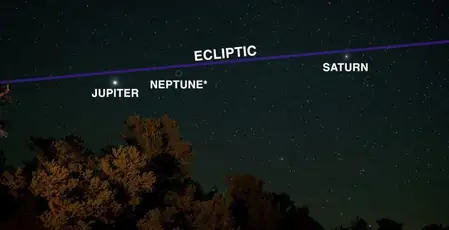
Picture this: the velvet sky pierced by a row of brilliant planets, standing sentinel in flawless formation. Welcome to the Planet Parade, a celestial spectacle that turns heads and fills feeds with awe-struck photos.
At its core, it’s perspective play—planets orbiting coplanar around the Sun appear queued along the ecliptic band. Key moments like conjunctions (close encounters) and oppositions (Sun-opposite stances) sharpen the lineup for Earthbound eyes.
Easiest catches? Mercury’s elusive twinkle, Venus’s searing light, Mars’s ochre spark, Jupiter’s regal beam, Saturn’s subtle elegance. These movers-and-shakers earned ‘planet’ status from their nomadic trails. Far-flung Uranus, Neptune? Telescope territory.
Expect longevity: NASA says five-planet extravaganzas stretch across multiple evenings, orbits dictating the pace. Best bets: sunset fades or sunrise previews, planets perched 10+ degrees skyward to cut atmospheric interference. Horizon huggers blur out; pollution and obstacles compound the challenge.
Insider edge: Sun-near Mercury and Venus rarely rendezvous long—Venus for seasonal spells, Mercury in hit-and-run bursts. Linking with Mars-Jupiter-Saturn yields epic, enduring vistas.
Planet Parades aren’t just pretty pictures; they’re portals to solar mechanics, blending myth with measurement. Stay vigilant—clear nights await to unveil the universe’s lineup in living color.