


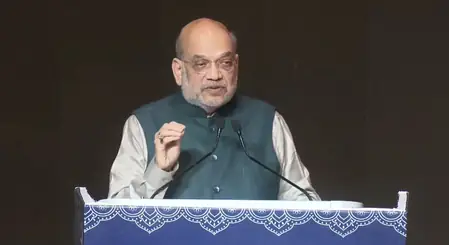
At a crucial national summit on countering cyber fraud, Union Home Minister Amit Shah called for an ironclad framework as agencies like I4C, state police, CBI, NIA, ED, telecom authorities, banks, IT ministry, RBI, and courts intensify joint operations to stamp out digital crimes.
Shah showcased I4C’s impact: from 2020 to 2025, its portal drew 230 million+ interactions, processed 8.2 million reports, filed 184,000 FIRs, and resolved countless cases—signaling heightened awareness and action.
The ministry’s forward-thinking strategy integrates live monitoring, forensic capabilities, workforce upskilling, technological advancements, public sensitization, and cyber hygiene enforcement. ‘Unified coordination will make us unbreakable,’ he declared.
I4C, born in 2019, has engineered top-tier infrastructure, streamlined inter-agency collaboration, and delivered results against offenders. Shah hailed the CBI-led multi-stakeholder model, where roles are specialized: investigation by law enforcement, oversight by financial bodies, closure by courts.
Amid this, India’s connectivity has soared—internet users at 1 billion (4x in 11 years), broadband at 100 crore+ (16x), data prices down 97%, BharatNet linking 2 lakh villages, UPI dominating with 181 billion 2024 transactions worth 233 trillion rupees, leading global digital payments at 97% value and 99% volume.
Participants converged to dissect cyber fraud trends, scales, and evolutions, forging consensus for India’s secure digital future.