


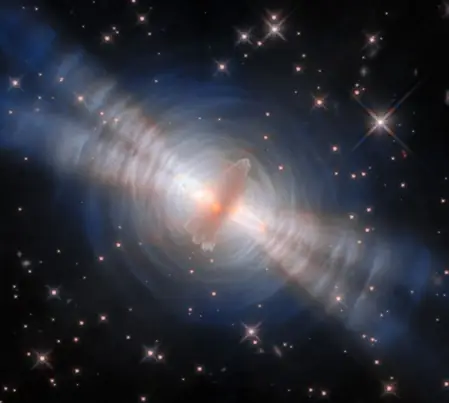
At the heart of stellar drama lie pulsars: hyper-dense neutron stars that whirl hundreds of revolutions per second, emitting rhythmic blasts of energy. NASA’s updates have propelled these space oddities to viral fame, unveiling why they behave like interstellar lighthouses with unmatched ferocity.
Originating from the explosive demise of sun-like giants, pulsars compress immense mass into minuscule volumes. Their cores boast teaspoon-weights of mountains, fueled by magnetic fields that dwarf all earthly magnets. Rotation, inherited and amplified, hurls radiation pulses our way at regular beats.
History credits 1967 Cambridge for the eureka moment—regular radio ticks dismissed as ET chatter, later crowning a Nobel for key pioneers. Fast-forward: 2,000+ pulsars mapped, spanning the galaxy’s tapestry.
NASA’s game-changer, NICER on the ISS since 2017, wields X-ray eyes to dissect blazing surfaces and buried forces. Targeting the 50-year-old trailblazer PSR B1919+21, it captures pulse nuances revealing core secrets—neutrons mashed with quarks under hellish duress.
‘Our timing precision delivers mass-radius benchmarks, revolutionizing nuclear theory,’ affirms PI Keith Gendreau. NICER’s feats extend to relativity trials and wave hunts, positioning pulsars as precision instruments.
Practically, they calibrate deep-space voyages and sift gravitational whispers from merging behemoths. Pulsars thus bridge observation and theory, decoding supernova forges, exotic matter, and spacetime warps. In an expanding universe of wonders, these relentless rotators remain beacons of profound insight.