


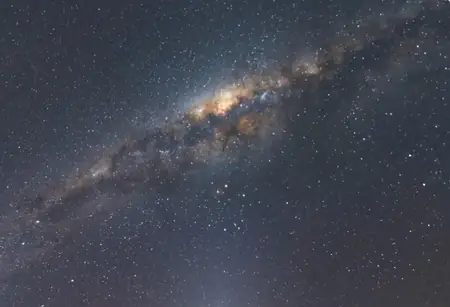
Stargazers often confuse it with impending sunrise, but the zodiacal light is a solar system exclusive: a shimmering triangle of scattered sunlight from orbiting dust. Post-sunset westward or pre-sunrise eastward, it paints the ecliptic with a hazy luminescence that’s both elusive and enchanting.
Interplanetary dust, shed by comets and born from asteroid crashes, catches solar rays to produce this effect. Denser near the sun, the glow diffuses outward, forming a pyramid visible under ideal conditions—clear equinox skies, low light pollution, and proximity to the equator for enhanced clarity.
Recent NASA Juno data pinpoints Mars as a key contributor. The mission’s dust analyzer logged impacts from Red Planet storm debris, dispersing across heliocentric space and amplifying the zodiacal band. This sets it apart from polar lights, high-altitude clouds, or galactic haze, anchoring it firmly in solar dynamics.
Capture it by escaping urban glow to rural outposts during moonless nights. The zodiacal light transforms ordinary stargazing into a profound encounter with the gritty underbelly of our stellar home, where dust dances in eternal sunlight.