


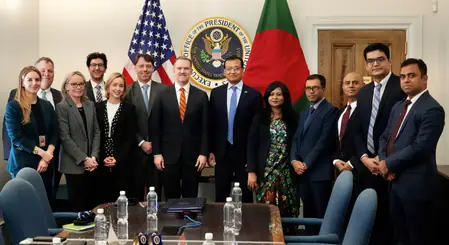
Washington buzzed with optimism as the U.S. and Bangladesh clinched a pivotal bilateral trade deal, the first of its kind for America in South Asia. Covering tariff schedules, access protocols, worker safeguards, and e-commerce guidelines, it charts a course for equitable prosperity.
The ink dried under the watchful eyes of U.S. Trade Representative Jamison Greer and Bangladesh Advisor Sheikh Bashir Uddin. Greer lauded it as emblematic of President Trump’s pro-worker trade agenda: a move to ‘unlock markets, eliminate obstacles, and empower American exporters.’
U.S. exporters stand to gain immensely, with Bangladesh easing entry for industrials like machinery and chems, med devices, energy, plus ag powerhouses: soy, dairy, poultry, beef, nuts, fruits. Tariffs flowing back to the U.S. cap at 19% typically, ensuring fairness.
Bangladesh greenlights U.S. norms for cars, medicals, pharma, and ag inspections, slashing red tape. Core to the deal: ironclad labor protections per global norms, enforcement muscle, forced-labor bans. Export zones reform, digital trade formalized.
National security syncs with commerce via shared export regimes, sanctions, supply resilience, and curbs on suspect tech/defense sourcing. Bangladesh commits to scaled U.S. imports—grains, soy, cotton, LNG long-hauls, civil/military aviation.
Post-ratification, 60 days to liftoff; 60-day opt-out. This forward-looking pact not only juices bilateral trade but embeds strategic alignment, heralding a robust partnership poised to weather economic storms and seize opportunities ahead.