


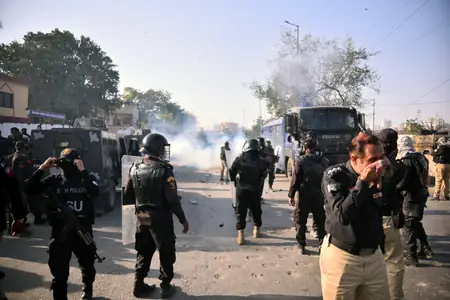
Echoes of tragedy reverberated through Karachi on Wednesday, marking the third day of a total lockdown fueled by the shocking assassination of Ayatollah Ali Khamenei, Iran’s Supreme Leader. Eleven lives lost in US Consulate protests have escalated security to unprecedented levels across Pakistan’s commercial capital.
The spark lit on Mai Kolachi Road, where grieving crowds clashed violently, overwhelming initial responses. Now, fortifications dominate: containers seal PIDC and Jinnah Bridges, halting flows to Mai Kolachi.
Rangers scrutinize IDs at every turn from MT Khan and Boat Basin, permitting only essentials. Affected residents pivot to Clifton Bridge alternatives for Metropole-II Chundrigar access, under watchful traffic police eyes.
Helplines buzz with queries as enforcers hold the line citywide. This fortress-like setup safeguards against repeat unrest.
US missions reacted decisively, suspending Islamabad embassy and Lahore-Karachi consulates until March 6, with visa cancellations announced via X amid ‘security situation.’
Beyond immediate chaos, the episode exposes fault lines in Pakistan’s geopolitical stance, blending Shia solidarity with US alliance strains. As normalcy teeters, leaders face pressure to normalize without compromising safety, eyeing economic ripple effects from prolonged stasis.