


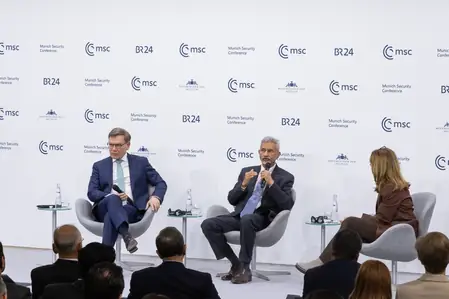
At the prestigious Munich Security Conference, India’s Foreign Minister S. Jaishankar unequivocally defended the nation’s right to chart its own course on Russian oil imports, rebuffing persistent US claims of restraint. His speech highlighted strategic autonomy as an unshakeable principle guiding New Delhi’s global engagements.
Fueling the debate are recent US sanctions on Russian energy and proclamations from President Donald Trump and Secretary Marco Rubio. Trump claimed India pledged to ramp up US buys while halting extra Russian crude, a narrative Rubio reinforced by noting assurances amid Europe’s diversification efforts.
Jaishankar dismantled these portrayals, stressing that energy procurement is driven by cold market logic—availability, affordability, and risk mitigation. ‘Indian firms act like others globally, choosing what’s best for them,’ he asserted, linking this to India’s profound commitment to independent policymaking rooted in its developmental journey.
Directly addressing trade agreement concerns, he affirmed: ‘I’ll decide freely, even if it differs from your views.’ With no official Indian endorsement of US interpretations, the stance preserves flexibility in a volatile sector.
This episode reveals India’s adept navigation of great-power rivalries. Russian discounts have proven vital for energy security, buffering against global upheavals like the Ukraine war. Jaishankar’s forthrightness bolsters India’s image as a self-assured actor, unwilling to trade sovereignty for partnerships.
As discussions on security and trade intensify, his message lingers: strategic autonomy empowers India to thrive amid uncertainty, fostering decisions that propel national progress without compromise.