


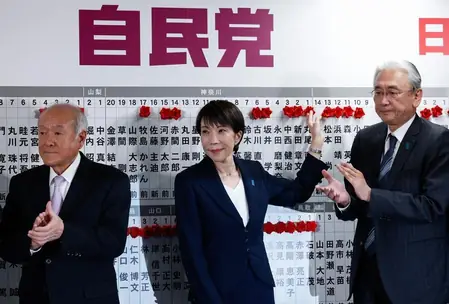
The echoes of Japan’s general election still reverberate through Tokyo, where the Liberal Democratic Party’s (LDP) overwhelming success has scripted a predictable sequel: Prime Minister Sanae Takaichi’s re-election on February 18 via special parliamentary session.
Constitutional protocol, as noted by Jiji Press, mandates this within 30 days. Current ministers resign collectively; chambers vote independently—first-round majorities prevail, or top-two runoffs decide. Disagreements defer to the dominant lower house.
No drama anticipated here. LDP’s 316 lower house seats—over two-thirds of 465—plus JIP’s 36, forge an impregnable 352-seat coalition. Media bets heavily on Takaichi’s smooth sailing.
Her win stems from astute politicking: an electrifying, diversionary campaign that outpaced policy critiques. Yet beneath the triumph, fault lines emerge—right-wing rhetoric jars against economic fragility, testing her mettle ahead.
Opposition imploded spectacularly. The Centrist Reform Alliance’s 49 seats fell woefully short of 172 forecasts, dooming CDPJ-Komeito hopes. LDP’s mandate is clear, unyielding, positioning Takaichi for another term amid high stakes.