


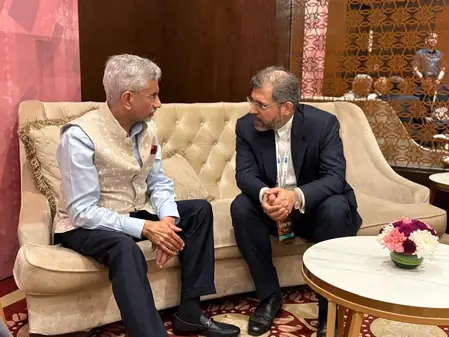
Amid spiraling conflict in West Asia, India’s Foreign Minister S. Jaishankar convened with Iran’s Deputy Foreign Minister Saeed Khatibzadeh on the margins of Raisina Dialogue 2026 in New Delhi Friday. Sparked by US-Israel assaults on Iran from February 28, the crisis has reshaped regional dynamics.
The strikes sought to dismantle Tehran’s missile infrastructure, armed forces setup, and nuclear pathway, eliminating key leaders like Supreme Leader Ayatollah Ali Khamenei early on. Iran countered ferociously, deploying drones and missiles against US bases, capital cities in the region, and supporting armies.
India’s marquee geopolitical conclave, the 11th Raisina Dialogue, launched March 5 under Prime Minister Narendra Modi’s auspices. Finland President Alexander Stubb featured prominently as chief guest, setting the tone with his inaugural remarks.
A joint ORF-MEA initiative spanning March 5-7, it unites an elite assembly of world leaders, policymakers, intellectuals, industry moguls, strategists, and press to confront epochal challenges.
Jaishankar’s itinerary brimmed with vital parleys: with France’s Benjamin Haddad, Germany’s Niels Annen, Tanzania’s Ngwaru Jumane Maghembe, GLOBESEC’s Robert Vass, and ECFR’s Mark Leonard. These exchanges highlight India’s deft maneuvering in turbulent times.
With the Middle East strife threatening global energy markets and maritime lanes, India’s engagement underscores a push for restraint and negotiation. Raisina Dialogue emerges as a beacon for such discourse, positioning India as a stabilizing force committed to multilateralism and mutual prosperity.