


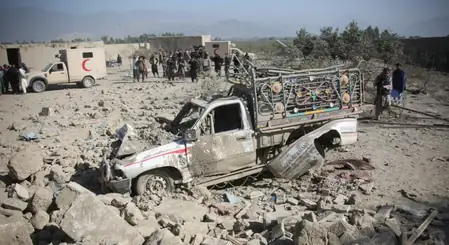
Fresh UN revelations expose the deadly price of Pakistan-Afghanistan hostilities: 34 killed and 89 injured in cross-border attacks over four intense days. Delivered in a UN briefing, spokesperson Stéphane Dujarric emphasized the preliminary nature of the data, which encompasses children and women, as UNAMA grapples with documentation in war zones.
Aid delivery falters in frontline areas, worsening the suffering of Afghans expelled from Pakistan. Projections indicate a refugee influx that could overwhelm already strained resources.
The spark? Pakistan’s preemptive strikes on February 21-22 against terror sites in Nangarhar and Paktika. Afghanistan retaliated on February 27, pounding Pakistani posts along the 2,600-km Durand Line. Defense Ministry sources detail hits on bases near Kabul, Khost’s Ali Sher, Jalalabad, and Kandahar’s Spin Boldak and Shorabak.
Victories mounted: three posts taken in Spin Boldak with three Pakistani deaths and one capture; two more in Ali Sher per Tolo News. Pakistan’s riposte, ‘Operation Gajab Lil-Haq,’ saw PAF jets hammer Afghan military nodes in key provinces.
Mutual allegations of militant safe havens fuel this powder keg. Recent escalations signal fraying ties, threatening regional stability.
International observers decry the civilian toll and urge ceasefires. Without de-escalation, the border risks becoming a perpetual battleground, with humanitarian needs skyrocketing. Both nations must prioritize talks over triggers to forge lasting calm.