


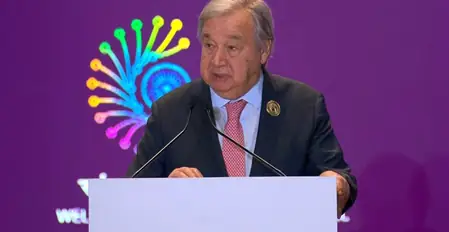
Tensions in the Middle East have reached a boiling point, prompting UN Secretary-General Antonio Guterres to warn the Security Council of an impending massive conflict during an emergency huddle in New York. Sparked by American-Israeli assaults on Iran and Tehran’s Gulf counteroffensive, Russia has joined the fray with strong condemnations.
Guterres minced no words: ‘These strikes threaten to trigger a domino effect in a tinderbox no one can tame.’ He voiced deep sorrow for botched diplomacy—Oman-facilitated U.S.-Iran parleys in Geneva and Vienna’s nuclear huddle on the horizon—while blasting all aggression and clamoring for ceasefire now.
America’s Mike Waltz hailed the precision hits as a beacon of resolve, aimed at crippling Iran’s nuclear dreams and provocative missiles. ‘This safeguards the world from Iranian menace; it’s non-negotiable global security,’ he stressed, citing Tehran’s history of belligerence.
Tehran’s envoy Amir Saeid Iravani retorted with fury, accusing foes of civilian-targeted barbarism and labeling preemption excuses as baseless lies. He vouched for Iran’s civilian nuclear path.
Moscow’s Vassily Nebenzia called it outright invasion of sovereignty, linking it to JD Vance’s Iraq regrets—deemed avoidable with dire casualties—mocking U.S. failure to evolve.
Jerusalem’s Danny Danon invoked Iran’s death chants to America and Israel, defending action: ‘We halt fanaticism early.’ As Guterres implores restraint, the Middle East teeters, with diplomacy’s threadbare hope clashing against military momentum.