


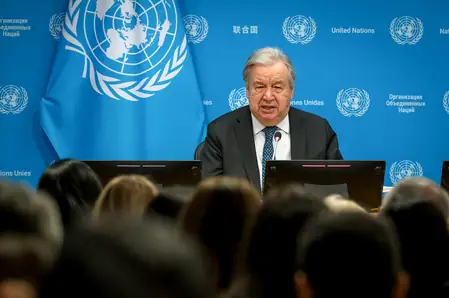
As whispers of war echo through the Gulf, UN chief Antonio Guterres intensified diplomatic maneuvers Monday, conferring with pivotal leaders to counter the economic shockwaves from Iran-related strife. Spokesperson Stephen Dujarric flagged the peril: regional skirmishes have propelled oil prices up 5.63%, with a Hormuz Strait blockade poised to unleash chaos on energy-dependent economies everywhere.
The fallout, Dujarric stressed, hammers the vulnerable hardest—poor countries left reeling from price hikes and shortages. Guterres is particularly troubled by the domino threat to non-combatants like Jordan, Syria, Lebanon, and Gulf allies.
His call list featured Qatar’s Sheikh Tamim bin Hamad Al Thani, Oman’s Sayyid Badr bin Hamad Albusaidi, and Gulf Cooperation Council representatives. Conversations underscored pivoting from confrontation to constructive dialogue for swift stability.
Oman earned Guterres’ gratitude for bridging Iran-US divides, even as he repeated rebukes of attacks on Iran by America and Israel, plus Iranian counterstrikes on Gulf soil. These incidents followed closely on the heels of Geneva parleys between Iran and Israel, mediated by Oman.
Guterres’ urgent manifesto demands an instant truce, tension reduction, and dialogue-driven solutions. In an era of fragile recovery, his proactive stance not only averts wider war but fortifies the global economy against the tempests of geopolitics.