


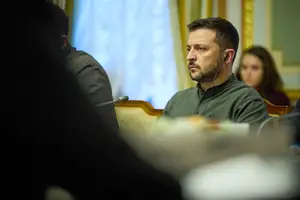
Marking four grueling years of war, Ukrainian leader Volodymyr Zelensky issued a battle cry for peace on February 24. ‘Putin hasn’t crushed us or conquered Ukraine. We’ve held the line, and we’ll fight for peace ensuring true justice,’ he stated, as the invasion stretches into its fifth year.
Unpacking the origins reveals NATO phobia at Russia’s core. Putin perceives Ukraine’s alliance pursuit as a red line, post-Soviet independence tilting Kyiv toward Washington and Brussels, heightening Moscow’s paranoia over encirclement.
Tinderbox moments defined the prelude: 2014’s Yanukovych downfall led to Crimea’s snap referendum and annexation, plus Donbas insurgency. Russia formalized support in 2022 by acknowledging the Donetsk and Luhansk ‘people’s republics,’ greenlighting invasion.
War’s theater spans vast fronts—Kyiv sieges, Kherson liberations, Bakhmut meatgrinders—showcasing Ukraine’s adaptive warfare against Russia’s blunt force. International aid flows: ATACMS missiles, F-16 pledges, economic lifelines.
A breakthrough looms via U.S. mediation, with Trump’s comprehensive 28-point accord spurring dialogue. Energy wars, nuclear saber-rattling at Zaporizhzhia, and refugee tides underscore stakes.
Zelensky’s anniversary reflection pivots from defense to diplomacy, signaling strategic maturity. As winter bites and drones hum, can negotiators forge durable peace? Ukraine’s saga tests the free world’s mettle.